• Published on

    As seen on CBS American Health Front

    Picture
    KPIX-TV, CBS, Channel 5 - Saturday, June 3, 2017 @ 7:00-7:30pm

    “AMERICAN HEALTH FRONT!” has been produced by Medical Media Group since 2002. The program is dedicated to educating the public on healthcare technologies, providing our viewers with valuable information on the latest treatments and discoveries. Each half-hour program consists of news reports that introduce our audience to local health care specialists utilizing current techniques that are changing lives.
  • Published on

    Recognized on the [415] Top Doctors 2017 List

    Recognized on the [415] Top Doctors 2017 List
    Marin Magazine conducted a 2015 survey that has resulted in this [415] Top Doctors list — top physicians practicing in San Francisco and Marin counties who received multiple independent recommendations from their peers. The list was rechecked again this year. The survey process started with a list of more than 4,000 licensed doctors across all specialties in both counties. All doctors on this list were both candidates and eligible voters in the peer-to-peer voting poll. Doctors were allowed to cast an unlimited number of votes across all specialties — they could vote for as many doctors as they wanted regardless of specific area of expertise — but they could only vote for the same doctor once.

    http://www.marinmagazine.com/People-Places/415-Top-Doctors/

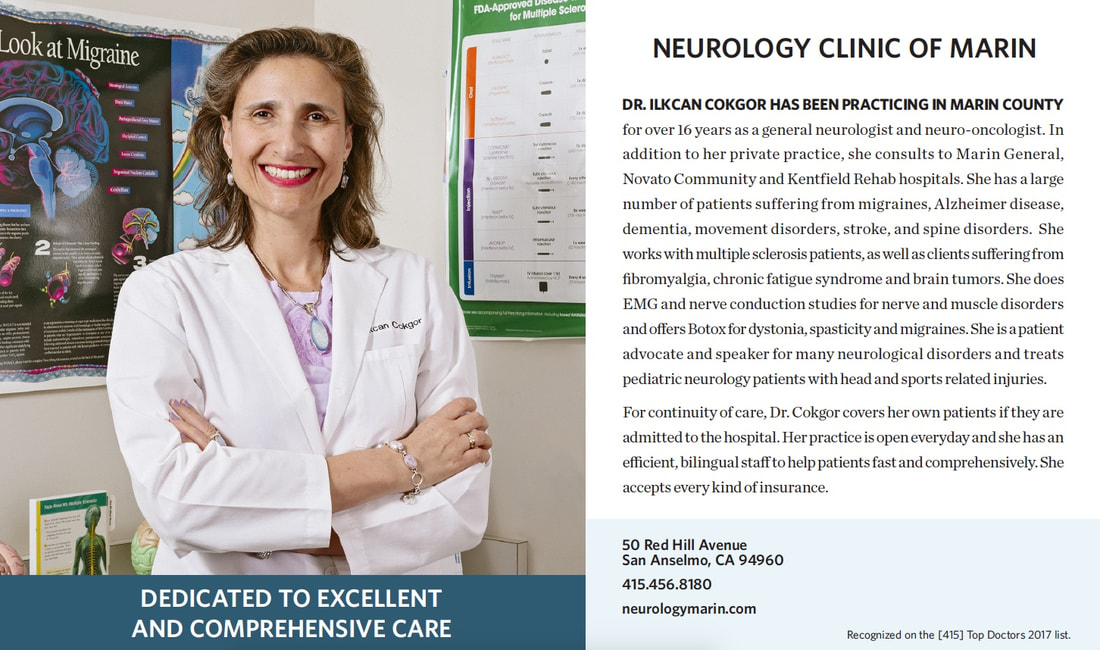
    DR. ILKCAN COKGOR HAS BEEN PRACTICING IN MARIN COUNTY for over 16 years as a general neurologist and neuro-oncologist. In addition to her private practice, she consults to Marin General, Novato Community and Kentfield Rehab hospitals. She has a large number of patients suffering from migraines, Alzheimer disease, dementia, movement disorders, stroke, and spine disorders. She works with multiple sclerosis patients, as well as clients suffering from fibromyalgia, chronic fatigue syndrome and brain tumors. She does EMG and nerve conduction studies for nerve and muscle disorders and offers Botox for dystonia, spasticity and migraines. She is a patient advocate and speaker for many neurological disorders and treats pediatric neurology patients with head and sports related injuries. For continuity of care, Dr. Cokgor covers her own patients if they are admitted to the hospital. Her practice is open everyday and she has an efficient, bilingual staff to help patients fast and comprehensively. She accepts every kind of insurance.
    Picture
  • Published on

    Stroke Director for Marin General

    Stroke Director for Marin General
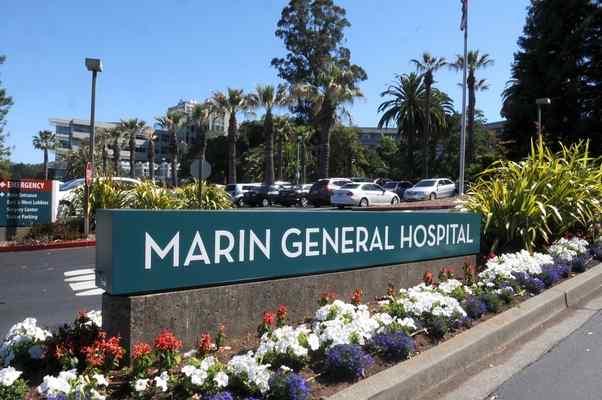
    Marin General Hospital is one of the main stroke centers in Marin county. We have a very aging population with stroke risk factors. We are diamond certified for our care of patients admitted to MGH. We take care of acute stroke patients by giving them TPA, admitting them for the full work up by doing MRI, echo and risk management. Then we refer them to rehab hospitals and follow up after their discharges till their fulll recovery. We have a close relationship with paramedic services, stroke awareness centers and provide all the information to our patients before they get discharged.

    ​Dr. Cokgor became the stroke director in MGH as of May 2017. She oversees ER, hospitalists, Neurologists, physical, occupational therapy and speech therapy services. She is responsible for the timeliness and the availability of offering every cutting edge therapy to our patients. When needed we transfer patients to university hospitals for thrombus retraction. We educate patients' families about care and symptoms. We have very trained nurses, doctors and therapists in MGH to provide all the needs for stroke patients and families.
  • Published on

    Concussion and Related Syndromes

    Concussion and Related Syndromes
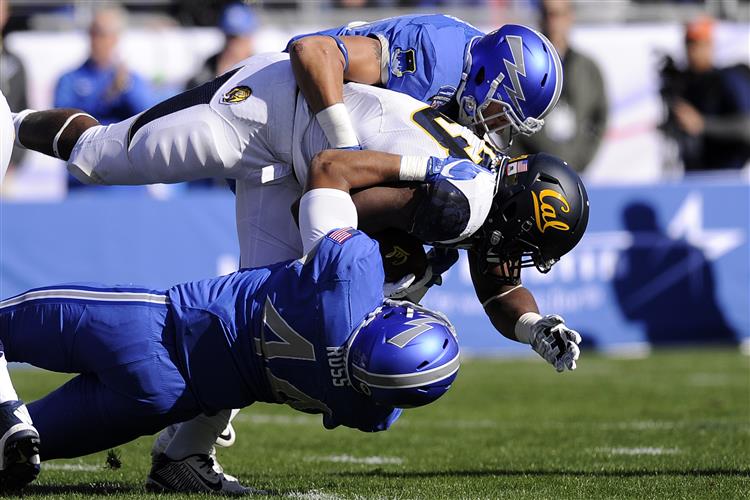
    Concussion is a direct impact by a blow or whiplash to the head, face and the neck. It can be a blow to the body that transmits to head too. In mild cases, symptoms resolve within 10 days. CT or MRI of brain are usually normal. If an injury is serious, the patients improve slowly over time. Torsional forces can delay the recovery.

    Post concussion syndrome symptoms are headaches, dizziness, imbalance, memory problems and mood swings. The pathophysiology involves many disrupted pathways in the brain either causing nerves to be functionally compromised or die at severe cases.

    Second impact syndrome means a second head injury between 24 hours and 10 days after the first one. It can cause massive brain swelling leading to death or severe disability. It is common in young patients and boxers.

    ​Traumatic brain injury (TBI) is a consequence of concussion and can occur after bicycle accidents, skateboard accidents, MVAs, falls and sport injuries. Patients with repeated TBIs are at risk of chronic traumatic encephalopathy ( CTE). There are 4 stages of CTE. First stage includes headaches, inattention and concentration problems. Second stage includes impulsive behavior, depression and short term memory loss. Third stage includes executive dysfunction with severe cognitive decline. Fourth stage includes dementia. MRI of brain shows atrophy by then.

    Treatment of concussion is to stop any activity for 10 days and see a neurologist. Patients need a full exam, rest and sleep. Imaging may or may not be necessary. The patients should then start some limited exercise like walking, cycling or swimming. If they have recurrence of their symptoms they should stop immediately. There is no diagnostic blood test available yet to diagnose these patients. The patients, coaches and families should have a understanding of these syndromes before pushing athletes back to the fields.
  • Published on

    Chronic Tension Headaches (CTH)

    Chronic Tension Headaches (CTH)
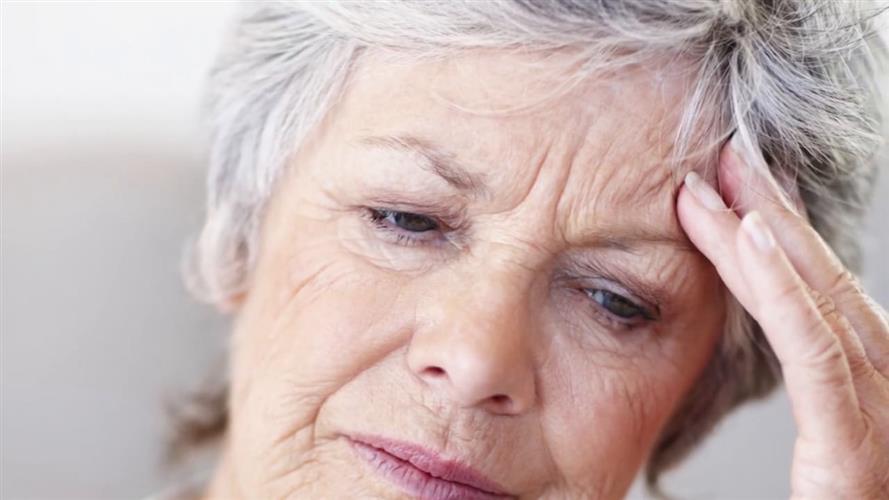
    Tension headaches are the most common type of headaches. Chronic Tension Headaches (CTH) mean constant tension headaches more than 15 days per month for at least 3 months. The CTH last hours to days and are constant. They can be episodic or chronic. They involve both sides of the head and they are pressing or tightening kind of pain that change in intensity from mild to severe. Unlike migraines, they are not accompanied by other symptoms such as nausea and light sensitivity. CTH mostly affect working people with jobs in front of a computer and students who carry heavy backpacks.

    The cause of CTH is unknown but both peripheral and central pain mechanisms play a role. The peripheral sensitization causes local tissue damage, producing pain and causing substances to be released. Prolonged peripheral sensitization leads to central sensitization which means that the pain radiates all around the original tissue. The main symptoms of CTH are tenderness and dull pain over frontal, neck muscles and chewing muscles. It hurts when a patient moves the neck up and down or sideways. It causes stiff neck muscles and postural abnormalities.

    ​The diagnosis includes eliminating other neck and brain causes contributing to pain syndrome first. Treatment is muscle relaxors, anti-inflammatory medications like Advil or Motrin and physical therapy. Physical therapist can evaluate the muscles, pain and pressure over the neck muscles. She can give isometric manual exercises, massage trigger points and mobilize joints. The best treatment is combination of physical therapy and massage. Botox is another option if all modalities fail.
  • Published on

    Welcome to our New Website

    Welcome to our New Website
    Dear patients, friends, and colleagues,

    This is my first ever blog and I am excited to share news with you on a regular basis on my new website. To start with I want to emphasize what I actually specialize on. I do both outpatient and inpatient Neurology which require different skills. Hospital patients get admitted mostly due to a stroke, head injury, brain infections and spinal cord problems. If patient develops severe pain in the neck or back or severe headache they get admitted for work up and treatment. If they develop sudden onset of weakness, numbness, speech difficulty and balance problems they get admitted to rule out a stroke.

    I treat every kind of neurological disorder in my clinic. I am a general neurologist with a long experience on migraines, dementia, multiple sclerosis and back and neck pain. I see young and old patients with concussion, brain injuries and bleeds. I am subspecialized in neuro-oncology which means I treat brain and spinal cord tumors but luckily these tumors are rare. I offer Botox injections for neck spasms, back torsion, migraines, TMJ problems and grinding. I also treat stroke related spasticity patients with Botox. I do EEG to work up seizure patients. I do EMG and nerve conduction studies for nerve and muscle disorders. Long experience with migraines, demantia , movement disorders like Parkinson's disease. 

    As you see I cover almost every part of Neurology. As I am very up to date with advances in Neurology and get qualified every year for new technology and medications I feel confident to help every kind of neurology patient. I will go into details and update you about the new discoveries and treatment options for different neurological disorders in my blog as time goes on.

    ​Please feel free to contact me through my contact web form with your questions, feedback and your own experiences. My staff and I hope to give you the best, comprehensive care possible in Marin county.