- Published on
-
-
- Published on
 I’m pleased to share a selection of articles that highlight the importance of expert, compassionate medical care here in Marin County and the Bay Area. These pieces offer insight into neurological care, introduce outstanding physicians in our community, and provide helpful information I believe patients and families will find valuable.
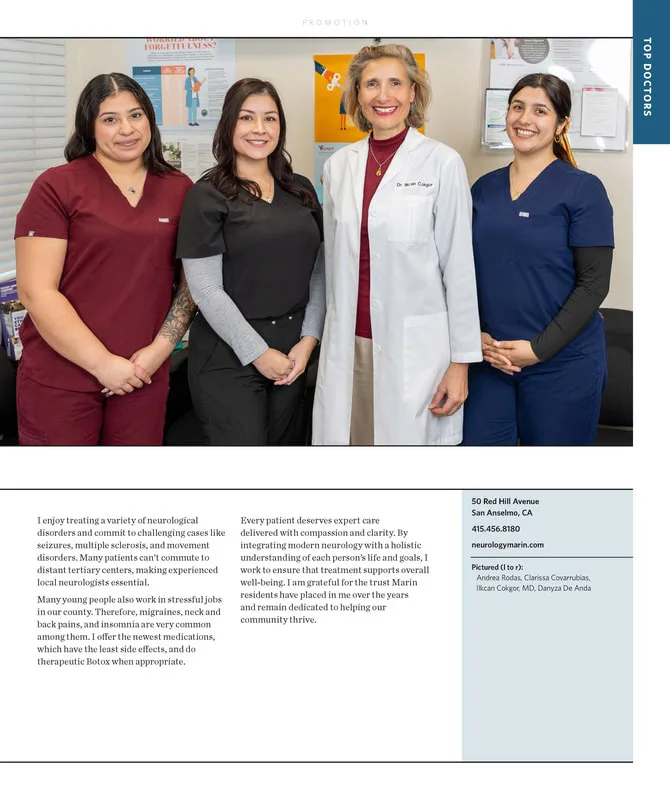
Featured Reads:- World-Class Neurological Care for Marin County Locals — Learn how Dr. Ilkcan Cokgor and her team are elevating neurological care for patients throughout Marin.
- Our Guide to the Top Docs in Marin and the Bay Area 2026 — A comprehensive look at the leading physicians and specialists you should know.
- Digital Marin Magazine — February 2026 Edition — Dive into the current issue for stories, insights, and lifestyle features that celebrate life in Marin.
-
- Published on

2024 Stroke Guidelines Award for Marin Health Medical Center

-
- Published on
Dr. Ilkcan Cokgor, MD selected for inclusion in the
Nationwide Registries Top Doctors of America 2024 Honors Edition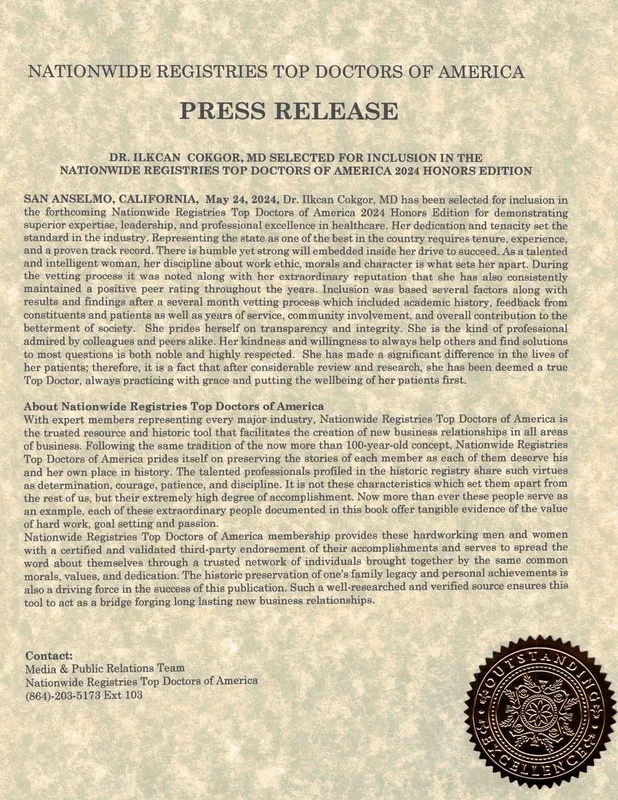
-
- Published on
-
- Published on
 For millions of individuals worldwide, migraines are not just occasional headaches but rather debilitating episodes that disrupt daily life. Migraines are a complex neurological disorder characterized by intense, throbbing headaches often accompanied by symptoms such as nausea, vomiting, light sensitivity, and visual disturbances. They can significantly impair a person's ability to carry out routine tasks, affecting their quality of life. Traditional treatments have often provided limited relief, prompting a search for more effective solutions. Prevention is key for individuals suffering from chronic migraines (experiencing headaches on 15 or more days per month for at least three months). One such breakthrough in migraine management comes in the form of CGRP (calcitonin gene-related peptide) receptor blocker medications in the treatment of both acute and chronic migraines. CGRP receptor blockers have emerged as a promising solution for this challenging patient population.
CGRP is a neuropeptide that plays a pivotal role in migraines. It is released during a migraine attack and is associated with the transmission of pain signals and inflammation in the brain. This discovery led to the development of CGRP receptor blocker medications. They are also known as CGRP antagonists or monoclonal antibodies, specifically designed to target the CGRP pathway. They block the receptors that CGRP binds to, inhibiting its effects on the brain. Traditionally, acute migraines have been treated with a combination of pain relievers, anti-nausea medications, and lifestyle modifications. While these approaches can be effective for some, they fall short for many others. CGRP receptor blockers offer a new avenue for acute migraine relief.
These medications are administered through oral, sublingual, or nasal ways, providing rapid and targeted relief when used as a rescue medicine. They are administered through oral or subcutaneous injections when used as preventive drugs. Studies have shown that they can significantly reduce the severity and duration of migraine attacks, offering hope for those who have struggled with conventional treatments. Unlike traditional preventive medications that may have side effects or interactions with other drugs, CGRP receptor blockers are well-tolerated with very mild side effects. Possible side effects are constipation or dizziness.
CGRP receptor blockers represent a significant advancement in the treatment of both acute and chronic migraines. By targeting the CGRP pathway, these medications offer new hope for individuals who have long grappled with the debilitating effects of this neurological disorder. As research in this field continues to evolve, we can anticipate even more refined and effective treatments, bringing us closer to a future where migraines no longer dominate the lives of those affected. If you or a loved one struggles with migraines, it may be worth discussing CGRP receptor blockers with your healthcare provider to see if they are a suitable option for you. Remember, relief might be closer than you think.